Home / People / Academic Staff / Haerim HWANG

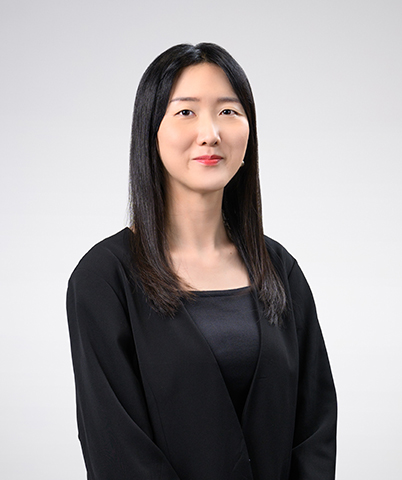
Haerim HWANG
Assistant Professor
B.A. (Korea National University of Education), M.A. (Seoul National University), Ph.D. (University of Hawaiʻi at Mānoa)
Administrative Post
Postgraduate Coordinator (Applied English Linguistics)
ELED Programme Coordinator
Office
Fung King Hey 325
Tel
3943 7020
Website
https://haerimhwang.github.io/
Research Interests
Language acquisition of morpho-syntax, Natural Language Processing, Psycholinguistics
Articles in Journals
| Accepted | Hwang, H. , & Han. G. Processing of passives using morphological information within the verb in a second language: Slower, but as robust as in a first language. Studies in Second Language Acquisition. |
| In press | Hwang, H. Evaluating the applicability of the transformer-based grammatical error correction system for assessing language accuracy. Language Testing in Asia. |
| In press | Kim, H., & Hwang, H. Verb-centric or balanced?: An NLP-based assessment of word class contributions to L2 writing proficiency. Assessing Writing. |
| In press | Kim, H., Kim, K., & Hwang, H. Effects of goals and strategies on predictive processing: A visual world eye-tracking study on honorific agreement in Korean. Linguistics. |
| In press | Kim, H., & Hwang, H. Cognitive approaches to examining the modality-specific development of lexical sophistication in young EFL learners. Vigo International Journal of Applied Linguistics. |
| 2025 | Hwang, H., & Kim, K. Prediction of there-associated nouns based on verbs in expletive sentences: Effects of cue validity, proficiency, and immersion experience. Bilingualism: Language and Cognition. Advance online publication. https://doi.org/10.1017/S1366728925100709 |
| 2025 | Hwang, H. Assessing the performance of pretrained models for accurate and consistent classification of argument structure constructions. Applied Artificial Intelligence, 39, Article 2566798. https://doi.org/10.1080/08839514.2025.2566798 |
| 2025 | Hwang, H., & Kim, K. Genre-specific features of second language speech: Connectives in exposition and narration. Applied Linguistics Review. Advance online publication. https://doi.org/10.1515/applirev-2024-0078 |
| 2025 | Hwang, H., & Park, S. Sensitivity to honorific agreement: A window into predictive processing. Linguistics Vanguard. Advance online publication. https://doi.org/10.1515/lingvan-2025-0006 |
| 2025 | Hwang, H., & Park, S. The influence of word co-occurrence frequency on predictive processing in first and second languages: A webcam-based eye-tracking study. Applied Psycholinguistics, 46, e18. https://doi.org/10.1017/S0142716425100052 |
| 2025 | Hwang, H., Chang, X., & Sun, J. (2025). Generative AI is useful for L2 writing, but when, why, and for how long do learners use it? Journal of Second Language Writing, 69, 101230. https://doi.org/10.1016/j.jslw.2025.101230 |
| 2025 | Hwang, H., & Kim, K. (2025). Effects of lexical frequency in predictive processing: Higher frequency boosts first language speed and facilitates second language prediction. Language Learning. Advance online publication. https://doi.org/10.1111/lang.12718 |
| 2025 | Hwang, H. Growth of lexical and syntactic complexity, accuracy, and fluency in spoken production of first language and second language children. System, 132, 103695. https://doi.org/10.1016/j.system.2025.103695 |
| 2025 | Kim, H., & Hwang, H. Learning contexts and proficiency matter: L2 sensitivity to conventional and unconventional dative pattern. Language and Cognition, 17, e21. https://doi.org/10.1017/langcog.2024.65 |
| 2025 | Hwang, H. The impact of subordination type and finiteness on second language development in timed impromptu writing: An NLP-based analysis using the Subordination Sophistication Analyzer. Written Communication, 42, 193–222. https://doi.org/10.1177/07410883241286900 |
| 2024 | Hwang, H. Wanna contraction in first language acquisition, child second language acquisition, and adult second language acquisition. Bilingualism: Language and Cognition, 27, 322–333. https://doi.org/10.1017/S1366728923000640 |
| 2024 | Hwang, H. Development of morphological diversity in second language Korean: An NLP analysis using the Korean Morphological Richness Analyzer 1.0. System, 121, 103260. https://doi.org/10.1016/j.system.2024.103260 |
| 2024 | Kim, H., & Hwang, H. Effects of pronominal reference on the integration of syntactic and semantic information in second language processing. International Journal of Applied Linguistics, 34, 1108-1122. https://doi.org/10.1111/ijal.12548 |
| 2024 | Hwang, H., & Kim, H. Korean Syntactic Complexity Analyzer (KOSCA): An NLP tool for the analysis of syntactic complexity in second language production. Language Testing, 41, 506–529. https://doi.org/10.1177/02655322231222596 |
| 2023 | Hwang, H. Second language acquisition of Pseudo-VP-ellipsis and Gapping in Korean. Language Research, 59, 237–252. https://doi.org/10.30961/lr.2023.59.3.237 |
| 2023 | Kim, H., Kim. K., Jo, K., Hwang, H. Sensitivity to syntactic dependency formation in child second language processing: A study of numeral quantifiers in Korean. Language and Cognition, 15, 763–785. https://doi.org/10.1017/langcog.2023.16 |
| 2023 | Hwang, H. Do position and lexical knowledge matter in children’s second language speech perception? Lingua, 289, 103527. https://doi.org/10.1016/j.lingua.2023.103527 |
| 2023 | Hwang, H., & Kim, H. Automatic analysis of constructional diversity as a predictor of EFL students’ writing proficiency. Applied Linguistics, 44, 127–147. https://doi.org/10.1093/applin/amac046 |
| 2022 | Kim, H., & Hwang, H. Assessing verb-construction integration in young EFL learners: Analyses of written and spoken production. Language Learning, 72, 497–533. http://doi.org/10.1111/lang.12480 |
| 2022 | Hwang, H. Syntactico-semantic realizations of pronouns in the English transitive construction: A corpus-based analysis. Corpus Linguistics and Linguistic Theory, 18, 115–143. http://doi.org/10.1515/cllt-2019-0061 |
| 2020 | Kim, H., Shin, G-H., & Hwang, H. Integration of verbal and constructional information in the second language processing of English dative constructions. Studies in Second Language Acquisition, 42, 825–847. http://doi.org/10.1017/S0272263119000743 |
| 2020 | Kim, H., Rah, Y., & Hwang, H. Testing usage-based approaches to assessing EFL learners’ development of English argument structure constructions. English Teaching, 75, 55–78. http://doi.org/10.15858/engtea.75.s1.202006.55 |
| 2020 | Hwang, H., Jung, H., & Kim, H. Effects of written versus spoken production modalities on syntactic complexity measures in beginning-level child EFL learners. The Modern Language Journal, 104, 267–283. http://doi.org/10.1111/modl.12626 |
| 2019 | Hwang, H., & Kim, H. A comparative analysis of EFL students’ needs and evaluation of English curriculum: A case study from Korea. English Teaching, 74, 3–29. http://doi.org/10.15858/engtea.74.4.201912.3 |
| 2017 | Kim, H., Hwang, H., & Rah, Y. Young EFL students’ reliance on path-breaking verbs in the use of English argument structure constructions. Journal of Cognitive Science, 18, 341–366. http://doi.org/10.17791/jcs.2017.18.3.341 |
Conference Papers
| Accepted | Hwang, H. GPT-5 models for automated essay assessment: Examining the influence of model size. In Proceeding of International Conference on Emerging Technologies and Education (ICETE 2026). |
| 2024 | Mengoni, P., Hwang, H., Shen, D. J., Li, Y., Wong, P. P. Y. Exploring the impact of interactive content on user experiences within a metaverse learning platform. In ICSLT 2024: Proceedings of the 2024 10th International Conference on e-Society, e-Learning and e-Technologies (ICSLT) (pp. 31–37). New York, NY: Association for Computing Machinery. https://doi.org/10.1145/3678610.36786 |
| 2024 | Hwang, H. The role of first language in automated essay grading for second language writing. In A. M. Olney, I-A. Chounta, Z. Liu, O. C. Santos, & I. I. Bittencourt (Eds.), Proceedings of the 25th International Conference on Artificial Intelligence in Education (AIED 2024) (pp. 302–310). Springer Cham. https://doi.org/10.1007/978-3-031-642999_25 |
| 2024 | Wong, P. P. Y., Lee, J., Gonzales, W. D. W., Choi, S. H. S., Hwang, H., Shen, D. J. New dimensions: The impact of the metaverse and AI avatars on social science education. In W. W. K. Ma, C. Li, W. F. Chun, H. H. Leong, A. Lu (Eds.), Proceedings of the 17th International Conference on Blended Learning. Intelligent Computing in Education (ICBL 2024) (pp. 90–101). Springer Singapore. https://doi.org/10.1007/978-981-974442-8_7 |
| 2018 | Deen, K., Bondoc, I., Camp, A., Estioca, S., Hwang, H., Shin, G.-H., Takahashi, M., Zenker, F., & Zhong, J. Repetition brings success: Revealing knowledge of the passive voice. In A. B. Bertolini & M. J. Kaplan (Eds.), Proceedings of the 42nd Annual Boston University Conference on Language Development (pp. 200–213). Somerville, MA: Cascadilla Press. |
Others
| Invited talk/workshop | |
| Forthcoming | Hwang, H. Natural language processing for Korean language data, Cyber Hankuk University of Foreign Studies, Seoul, Republic of Korea. (December 20) |
| 2025 | Hwang, H. EFL and ESL learners utilize generative AI in distinct ways in writing. Hong Kong Second Language Acquisition Research Forum, Hong Kong Polytechnic University, Hong Kong. (May 9) |
| 2025 | Hwang, H. Generative AI in English education. Ehwa Womans University, Seoul, Korea. (April 11) |
| 2024 | Hwang, H. The when, why, and how long of AI integration in second language writing. Hong Kong Association for Applied Linguistics. The Chinese University of Hong Kong, Hong Kong. (March 24) |
| 2024 | Hwang, H. AI and language. CUHK Knowledge Enrichment Programme – Sky is No Limit. The Chinese University of Hong Kong, Hong Kong. (December 20) |
| 2024 | Hwang, H. AI in language acquisition and processing. The International Association for Korean Language Education. Ehwa Womans University, Seoul, Republic of Korea. (July 5) |
| 2024 | Hwang, H. Analysis of second language production data in Korean using natural language processing, Cyber Hankuk University of Foreign Studies, Seoul, Republic of Korea. (June 22) |
| 2024 | Kim, K., & Hwang, H. Automated assessment of multilingual development and attrition based on reaction times: Focusing on HALA (Hawai‘i Assessment of Language Access). ALAK (Applied Linguistics Association of Korea) Workshop. Hankuk University of Foreign Studies, Seoul, Republic of Korea. (April 13) |
| 2023 | Hwang, H. AI and language. CUHK Knowledge Enrichment Programme – Sky is No Limit. The Chinese University of Hong Kong, Hong Kong. (December 20) |
| 2023 | Hwang, H. Language models and psycholinguistics. 2023 ALAK (Applied Linguistics Association of Korea) Research Method Workshop Series. Seoul National University, Seoul, Republic of Korea. (September 2) |
| 2023 | Hwang, H. Artificial Intelligence and language output; Python workshop: Machine translation and application of Hugging Face in utilizing large language models, tagging French data. AI Education Alliance and Policy lab, Seoul National University, Seoul, Republic of Korea. (July 7) |
| 2023 | Hwang, H. Deep learning; Python workshop: Regression analysis and Word2Vec. AI Education Alliance and Policy lab, Seoul National University, Seoul, Republic of Korea. (July 6) |
| 2023 | Hwang, H. Artificial Intelligence and language input; Python workshop: Corpus construction, text readability analysis, and question and answering. AI Education Alliance and Policy lab, Seoul National University, Seoul, Republic of Korea. (July 5) |
| 2023 | Hwang, H. Introduction to natural language processing; Python workshop: text preprocessing, speech recognition, and frequency analysis. AI Education Alliance and Policy lab, Seoul National University, Seoul, Republic of Korea. (July 4) |
| 2022 | Hwang, H. A self-paced reading task: Experimental design and analysis. College of Education, Seoul National University, Seoul, Republic of Korea. (November 15) |
| 2022 | Hwang, H. Artificial intelligence in applied linguistics. College of Education, Seoul National University, Seoul, Republic of Korea. (November 8) |
| 2022 | Hwang, H. Coh-Metrix workshop: Analysis of learner speech data. KAMALL (Korea Association of Multimedia-Assisted Language Learning) Digital Literacy Academy for Language Education Experts, Seoul, Republic of Korea. (June 10) |
| 2022 | Hwang, H. Python workshop: Text mining in Python. KAMALL (Korea Association of Multimedia-Assisted Language Learning) Digital Literacy Academy for Language Education Experts, Seoul, Republic of Korea. (March 11) |
| 2021 | Hwang, H. An NLP tool for the analysis of constructional diversity. ALAK (Applied Linguistics Association of Korea) International Conference 2021 on Language Learning, the Brain, and Computers, Hankuk University of Foreign Studies, Seoul, Republic of Korea. (October 2) |
| 2019 | Hwang, H., & Schwartz, B. D. How do L1-Korean speakers understand English VP-ellipsis and Gapping? NINJAL-UHM Linguistics Workshop on Syntax-Semantics Interface, Language Acquisition, and Naturalistic Data Analysis, University of Hawai‘i at Mānoa, Honolulu, USA. (October 12) |
| Presentation | |
| Forthcoming | Kim, K., Hwang, H., Kim, J., Lee, H., Kimg, Y., Baeg, J., & Han, G. Difficulty with 3SG -s in L2 English: A perceptual problem, not a knowledge deficit. 50 Boston University Conference on Language Development, Boston, USA. (November 6–9) |
| 2025 | Hwang, H., & Han, G. Following the eyes: L1 and L2 Processing of passive vs. active voice. Quebec Conference on Language Learning and Teaching, Quebec City, Canada. (August 21) |
| 2025 | Hwang, H. Machine learning-based prediction of second language proficiency in Korean: The effect of first language. 32nd Japanese/Korean Linguistics Conference, Cornell University, Ithaca, USA. (June 13) |
| 2025 | Ohba, A., Lee, Y., Hwang, H., & Shimada, H. Testing the split grammar hypothesis: ±Vraising or ±PPI? 32nd Japanese/Korean Linguistics Conference, Cornell University, Ithaca, USA. (June 15) |
| 2025 | Han, G., Hwang, H., & Cao, S. Real-time processing of passives vs. actives in L2 learners of English: a visual-world eye-tracking study. The International Conference on Theoretical East Asian Psycholinguistics, Waseda Research Innovation Center, Tokyo, Japan. (April 17) |
| 2024 | Hwang, H. Deep learning approach to classification of argument structure constructions. 15th International Conference of Experimental Linguistics, Université Paris Cité, Paris, France. (October 25) |
| 2024 | Wong, P. P. Y., Lee, J., Gonzales, W. D. W., Choi, S. H. S., Hwang, H., & Shen, D. J. New dimensions: The impact of the metaverse and AI avatars on social science education. 17th International Conference on Blended Learning, University of Macau, Macau. (July 30) |
| 2024 | Hwang, H. The role of first language in automated essay grading for second language writing. The 25th International Conference on Artificial Intelligence in Education (AIED 2024). Recife, Brazil. (July 10) |
| 2024 | Mengoni, P., Hwang, H., Shen, D. J., Li, Y., Wong, P. P. Y. 2024 International Conference on e-Society, e-Learning and e-Technologies, Rome, Italy. (June 22) |
| 2024 | Hwang, H. Ellipsis. Seoul National University, Seoul, Republic of Korea. (March 15) |
| 2024 | Hwang, H., & Kim, K. Lexical frequency as a factor in optimizing second language prediction: A visual-world eye-tracking study. Hong Kong Second Language Acquisition Research Forum 2024, The Chinese University of Hong Kong, Hong Kong. (March 9) |
| 2024 | Hwang, H. Lexical and syntactic accuracy, complexity, and fluency in L1 and L2 children’s oral production. UZRT 2024 Early Language Learning in Formal Contexts. University of Zagreb, Croatia. (February 16) |
| 2023 | Hwang, H., & Kim, K. Boosting second language prediction: The significance of lexical frequency. 2023 The Korean Association for the Study of English Language and Linguistics Winter Conference. Seoul National University, Seoul, Republic of Korea. (December 2) |
| 2023 | Kim, K., Hwang, H., & Kim, J., Lee, H., Kim, Y., & Baek, J., & Kim, K. Sentence-position effects on L1-Korean learners’ processing of L2-English third person singular –s. 2023 The Korean Association for the Study of English Language and Linguistics Winter Conference. Seoul National University, Seoul, Republic of Korea. (December 2) |
| 2023 | Hwang, H. Lost in transition: Language acquisition in children and machines. Architectures and Mechanisms for Language Processing Asia 2023, The Chinese University of Hong Kong, Hong Kong. (poster, December 1) |
| 2023 | Hwang, H., & Kim, K. Connection between lexical frequency and second language prediction. 14th International Conference of Experimental Linguistics, Athens University, Athens, Greece. (October 19) |
| 2023 | Hwang, H. An automatic analysis of morphological diversity in second language Korean. 2023 Applied Linguistics Association of Korea International Conference, Jeju, Republic of Korea (hybrid). (October 12–13) |
| 2021 | Hwang, H. An NLP analysis of VP-ellipsis and Gapping in EFL input. 2021 KAPEE (Korea Association of Primary English Education) Workshop and Annual Conference, Gyeongin National University of Education, Anyang, Republic of Korea. (October 2) |
| 2021 | Hwang, H. Natural language processing, acquisition, and processing of VP-ellipsis and Gapping. 2021 KASELL (Korean Association for the Study of English Language and Linguistics) Spring Conference on English Linguistics, Hanyang Women’s University, Seoul, Republic of Korea. (June 5) |
| 2021 | Hwang, H., & Schwartz, B. D. Processing verb gaps in a second language. Bi-annual Conference on Generative Approaches to Language Acquisition‒North America 9, University of Iceland in Reykjavík, Iceland. (poster, May 9) |
| 2020 | Hwang, H. Grammar search for wh-questions during task performance in English. 2020 KAPEE (Korea Association of Primary English Education) Workshop and Annul Conference, Gyeongin National University of Education, Anyang, Republic of Korea. (September 19) |
| 2019 | Hwang, H., & Schwartz, B. D. L2 acquisition of contrasts in interpretive ambiguity between VP-ellipsis and Gapping. Boston University Conference on Language Development 44, Boston University, Boston, USA. (November 9) |
| 2019 | Hwang, H., Jung, H. Y., & Kim, H. How do different processes of speaking and writing affect syntactic complexity in child second language production? International Cognitive Linguistics Conference 15, Kwansei Gakuin University, Nishinomiya, Japan. (poster, August 7) |
| 2019 | Hwang, H. Second language perception of English stops by Korean-speaking child learners: Effects of position and lexical knowledge. Hanyang International Symposium on Phonetics and Cognitive Sciences of Language, Hanyang University, Seoul, Republic of Korea. (poster, May 24) |
| 2017 | Deen, K., Bondoc, I., Camp, A., Estioca, S., Hwang, H., Shin, G., Takahashi, M., Zenker, F., & Zhong, C. Repetition Brings Success: Revealing knowledge of the passive voice. Boston University Conference on Language Development 42, Boston University, Boston, USA. (November 3) |
| 2017 | Hwang, H., Kim, H., & Schwartz, B. D. Revisiting empty-category processing by L2 learners with only classroom exposure. CUNY 2017: Conference on Human Sentence Processing, MIT, Boston, USA. (poster, March 30) |
Teaching
| ENGE2620 | Acquisition of English as a Second Language |
| ENGE2960 | The World in English: an Oxford Summer Programme |
| ENGE3610 | Psycholinguistics |
| ENGE3940 | AI and Language |
| ENGE3950 | AI and its Applications |
| ENGE5010 | Theoretical Linguistics |
| ENGE5410 | Psycholinguistics |
| ENGE5460 | Natural Language Processing for Applied Linguistics and Education |
| ENGE5630 | Cognitive Linguistics and Its Applications in Language Teaching |
Service
| 2025– | Associate editor Language Research |
| 2024 | General chair Postgraduate Roundtable in Applied Linguistics, The Chinese University of Hong Kong, Hong Kong |
| 2024– | Editorial board member Journal of English Teaching through Movies and Media |
| 2024– | Editorial board member Institute of Foreign Language Education, Hankuk University of Foreign Studies |
| 2024– | Board member The Korean Association for the Study of English Language and Linguistics |
| 2023– | Editorial board member, Reviewer Pan-Pacific Association of Applied Linguistics |
| 2023 | Expert consultant Development of AI & digital literacy education program for pre-service secondary school teachers AI Education Alliance and Policy Lab, Seoul National University |
| 2023– | Editorial board member The Applied Linguistics Association of Korea |
| 2021 | Member The Applied Linguistics Association of Korea |
| 2021 | Pre-service Teacher Trainer Seoul National University of Education, Sungok Elementary School, Seoul, Republic of Korea |
Grants
| External | |
| 2025–2026 | Postgraduate Students Conference/Seminar Grants Research Grants Council, Hong Kong “Postgraduate Worshop/Seminar on AI Applications in Humanities” Amount: HK$30,400 |
| 2025–2028 | Early Career Scheme Research Grants Council, Hong Kong “The syntactic repertoire of second language learners: A new look with natural language processing and psycholinguistics” Amount: HK$410,000 |
| 2025–2026 | Korean Studies Grant The Academy of Korean Studies, Republic of Korea “Development, validation, and application of a user-friendly web platform for natural language processing of Korean data” Amount: US$10,700 |
| 2024–2027 | Korea Institute for Curriculum and Evaluation, Republic of Korea “Data Construction for Training Artificial Intelligence Systems” (as Co-Investigator) Amount: KRW788,000,000 (≈ US$565,077) |
| Internal | |
| 2024 | Direct Grant for Research Faculty of Arts, The Chinese University of Hong Kong, Hong Kong "Silent structure in mind and brain: Unveiling the cognitive and neural mechanisms behind the processing of elliptical constructions" Amount: HK$100,000 |
| 2024 | Future Leaders in Digital Humanities Fellows Program The Chinese University of Hong Kong, Hong Kong Amount: US$5,250 (for a Professional Certificate in Artificial Intelligence) |
| 2024–2026 | Research Data Management Development Fund The Chinese University of Hong Kong, Hong Kong “Corpus and artificial intelligence: A step toward automated essay scoring” Amount: HK$100,000 |
| 2023–2024 | Direct Grant for Research Faculty of Arts, The Chinese University of Hong Kong, Hong Kong “Predictive processing in native and nonnative language: An interdisciplinary study combining psycholinguistics and computational linguistics” Amount: HK$94,971 |
Awards
| External | |
| 2022 | Wiley Top Cited Article 2020-2021 Award Effects of written versus spoken production modalities on syntactic complexity measures in beginning-level child EFL learners. The Modern Language Journal, 104, 267–283. |
| 2022 | Granite Tower Best Teaching Award, Top 5% Korea University, Republic of Korea |
| 2022 | Teacher Award Seoul Bukbu District Office of Education, Republic of Korea |
| 2020 | College of Languages, Linguistics & Literature Excellence in Doctoral Dissertation Research Award University of Hawai‘i at Mānoa, Honolulu, USA |
| 2020 - present | Dai Ho Chun Sholarship University of Hawai‘i at Mānoa, Honolulu, USA Amount: US$4,000 |
| 2015-2020 | Fulbright Scholarship U.S. Department of State, USA Amount: US$70,000 |